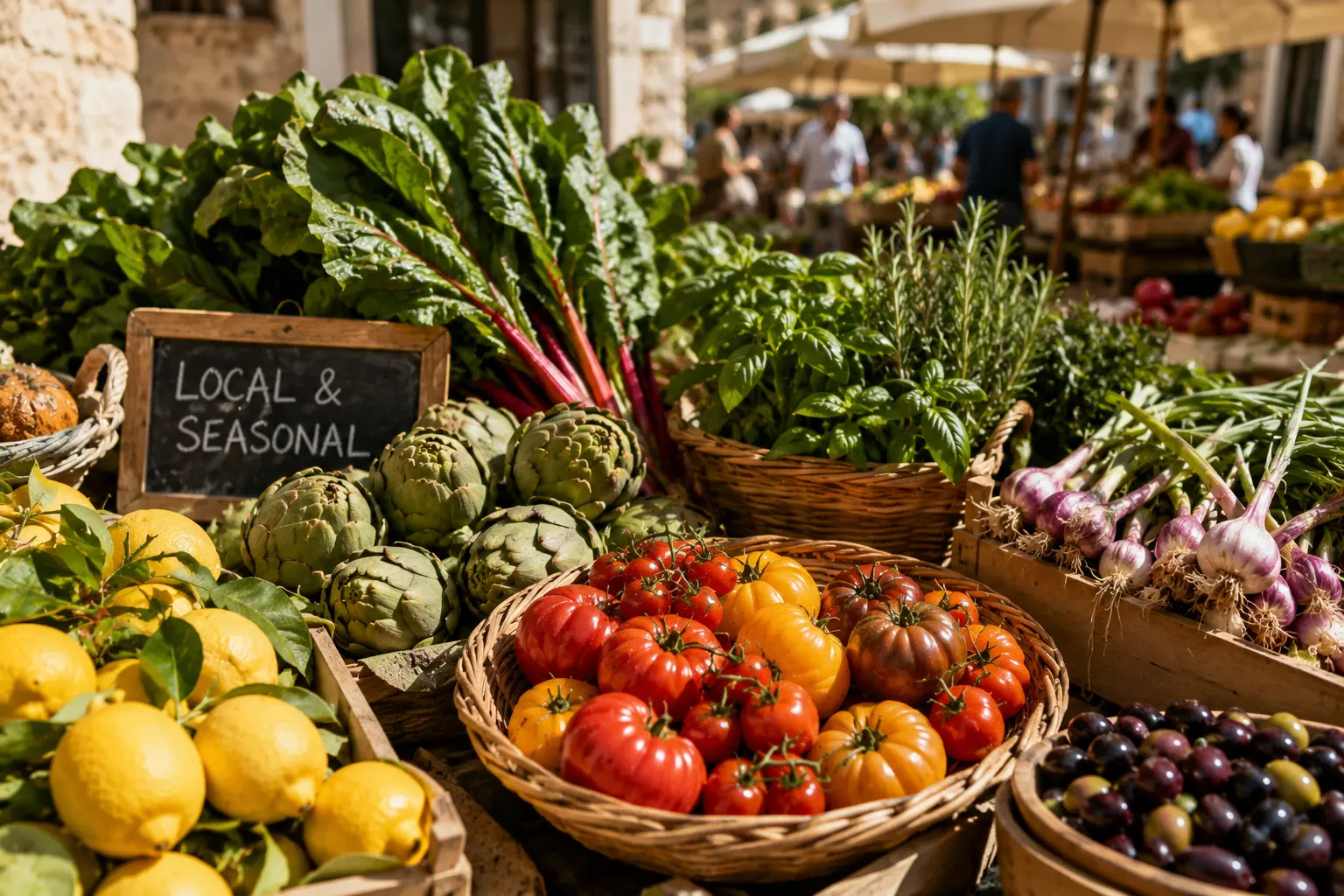
Cooking with the seasons is one of the simplest ways to make food taste better.
Instead of deciding what to cook and then searching for ingredients, seasonal cooking starts with a different question: what looks good right now?
When ingredients are at their best, they need less work. A ripe tomato needs little more than olive oil and salt. Fresh herbs can transform a simple bowl of grains. Good citrus can brighten an entire meal.
1. Let the Market Lead
Seasonal cooking begins before you enter the kitchen.
Look for what is abundant, colorful and fresh. Markets naturally change throughout the year, and allowing those changes to influence your cooking keeps everyday meals interesting.
Instead of building every meal around a fixed recipe, choose one great seasonal ingredient and build around it.
2. Spring: Fresh and Green
Spring calls for lighter flavors.
Fresh herbs, peas, asparagus, leafy greens and young vegetables work beautifully with lemon, yogurt, soft cheeses and olive oil.
Keep the cooking gentle and allow the freshness of the ingredients to remain the focus.
3. Summer: Keep It Simple
Summer produce rarely needs much help.
Tomatoes, eggplants, peppers, zucchini, cucumbers and stone fruits are at their best when prepared simply.
Grill vegetables over high heat, dress tomatoes with good olive oil, or serve ripe fruit with yogurt and something crunchy.
4. Autumn: Deeper Flavors
As the weather changes, the kitchen changes with it.
Squash, mushrooms, grapes, figs and root vegetables bring deeper, earthier flavors to the table.
Roasting becomes especially useful during this season. High heat concentrates sweetness and creates the caramelized edges that make simple vegetables feel substantial.
5. Winter: Slow Things Down
Winter cooking rewards patience.
Citrus, hardy greens, legumes and root vegetables work well in soups, braises and slow-cooked dishes.
This is the season for meals that can sit on the stove for a while — beans simmered with herbs, roasted vegetables, warming grains and dishes made for sharing.
Cook with What You Have
Seasonal cooking isn’t about following a strict calendar. It’s about paying attention.
Notice what looks best. Taste ingredients before deciding what they need. Substitute when something better is available.
Recipes should guide you, not restrict you.
The best seasonal meals often come from a handful of good ingredients, cooked simply and served generously.