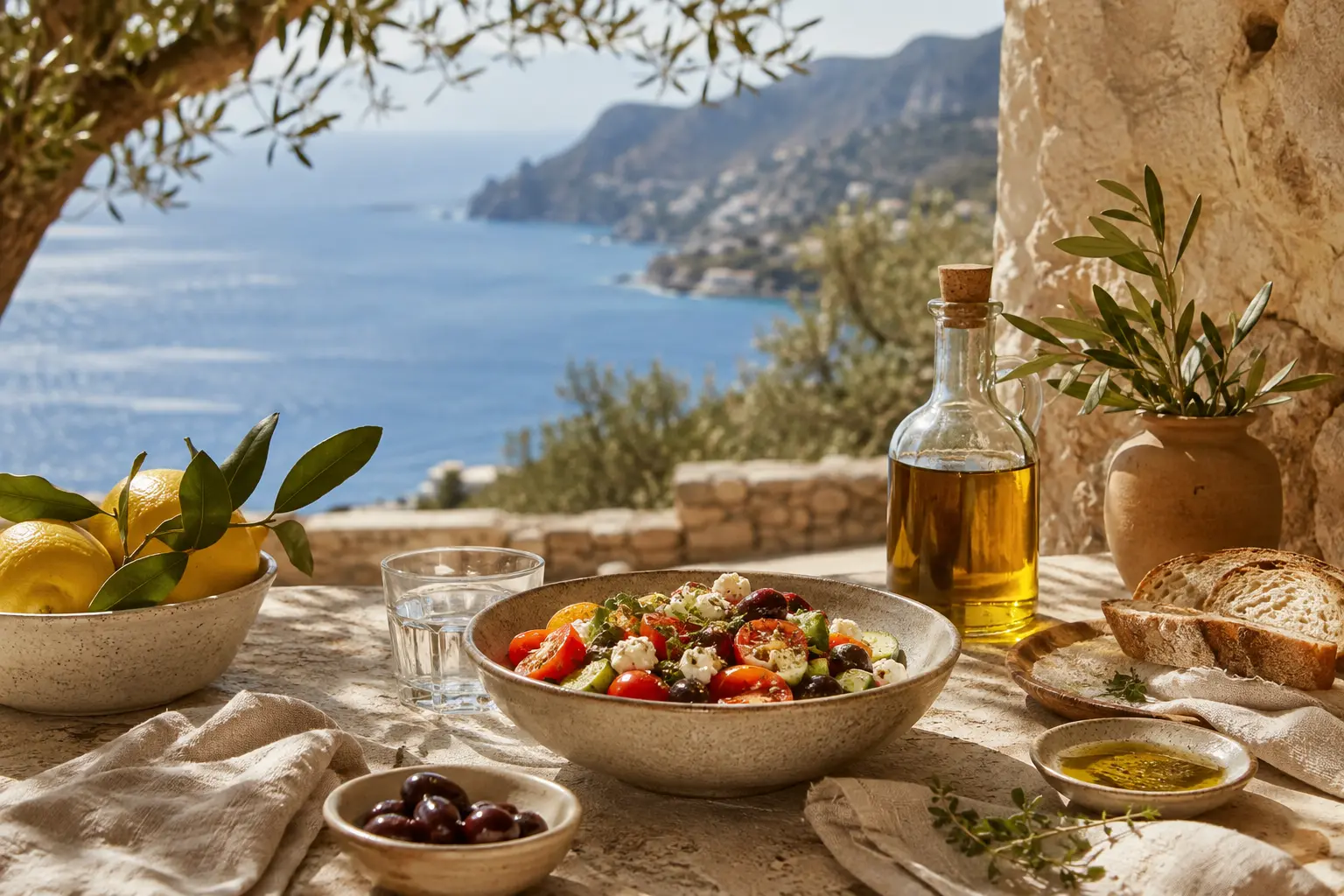
Simple Food, Made Well
Mediterranean cooking has never really belonged to a trend.
Long before it appeared on restaurant menus and lifestyle magazines, people across the Mediterranean were building meals around what was nearby: vegetables, grains, legumes, herbs, seafood, bread and olive oil.
The individual cuisines are incredibly diverse, but they share an approach to food that still feels remarkably modern.
1. Simple Ingredients Matter
Mediterranean cooking rarely depends on complicated techniques.
A few good ingredients can carry an entire dish.
Tomatoes, garlic, lemon, herbs and olive oil can become a sauce, salad, marinade or the beginning of dinner.
The quality of the ingredients matters more than the number of them.
2. Vegetables Take Center Stage
Vegetables aren’t treated as an afterthought.
Eggplant can be roasted until silky. Tomatoes become sauces and salads. Greens are cooked with olive oil and lemon. Peppers are grilled until smoky and sweet.
Meat and fish can still be part of the table, but they don’t always need to be the center of it.
3. Olive Oil Changes Everything
Olive oil is one of the defining ingredients of Mediterranean kitchens.
It can start a dish in the pan, become the base of a dressing or finish a plate just before it reaches the table.
Combined with lemon, garlic and herbs, it creates an almost endless number of simple sauces and marinades.
4. Every Region Tells a Different Story
There is no single Mediterranean cuisine.
Italy, Greece, Spain, Turkey, the Levant and North Africa each have distinct ingredients, traditions and techniques.
That variety is exactly what keeps Mediterranean cooking interesting.
One table might feature pasta and tomatoes. Another might have tahini, grilled vegetables and warm bread. Somewhere else, couscous, preserved lemon and spices might define the meal.
5. Food Is Made to Be Shared
Perhaps the most important part of Mediterranean cooking isn’t an ingredient at all.
It’s the table.
Food is often placed in the middle and shared rather than served as perfectly composed individual plates.
Bread is torn. Salads are passed around. Small dishes become a meal.
The experience matters as much as the recipe.
A Way of Cooking That Lasts
Mediterranean cooking continues to feel relevant because its foundations are simple: use good ingredients, cook with the seasons, waste less, share generously and don’t make food more complicated than it needs to be.
Techniques change. Restaurants change. Trends come and go.
A good tomato with olive oil, warm bread and people around the table doesn’t need reinventing.